Blog · Trek & Travel
HIMALAYAN SAGA CONTINUES - Tunganath , Chandrashila and Badrinath.
Author: Rajib Sengupta
Seven months after my last visit, I returned to Uttarakhand—this time with my wife, for a journey that combined trekking and pilgrimage. From the steep climb to Tunganath and Chandrashila, low oxygen, mountain weather, and the constant question of “How far?”, to the joy of a first Himalayan trek, a stormy night in tents, and the surprise of fresh snowfall the next morning—this journey had its own share of challenges and rewards. Along the way, even a tiny wild Himalayan raspberry became part of the story. The rest unfolds here...
Seven months on, I was back to Uttarakhand this May-end. This time with my wife, on a family trip; trekking and pilgrimage both being part of the plan.
When I visited Tunganath last October, the temple was already closed for the winter, so another visit was due on me. This year, the month of May has brought me that opportunity. We planned for a trek to Tunganath- Chandrashila and a visit to Badrinath Dham. Papiya was enthusiastic as it would be her first himalayan trek. However, of late she had been a regular trekker in Shayadri hills.
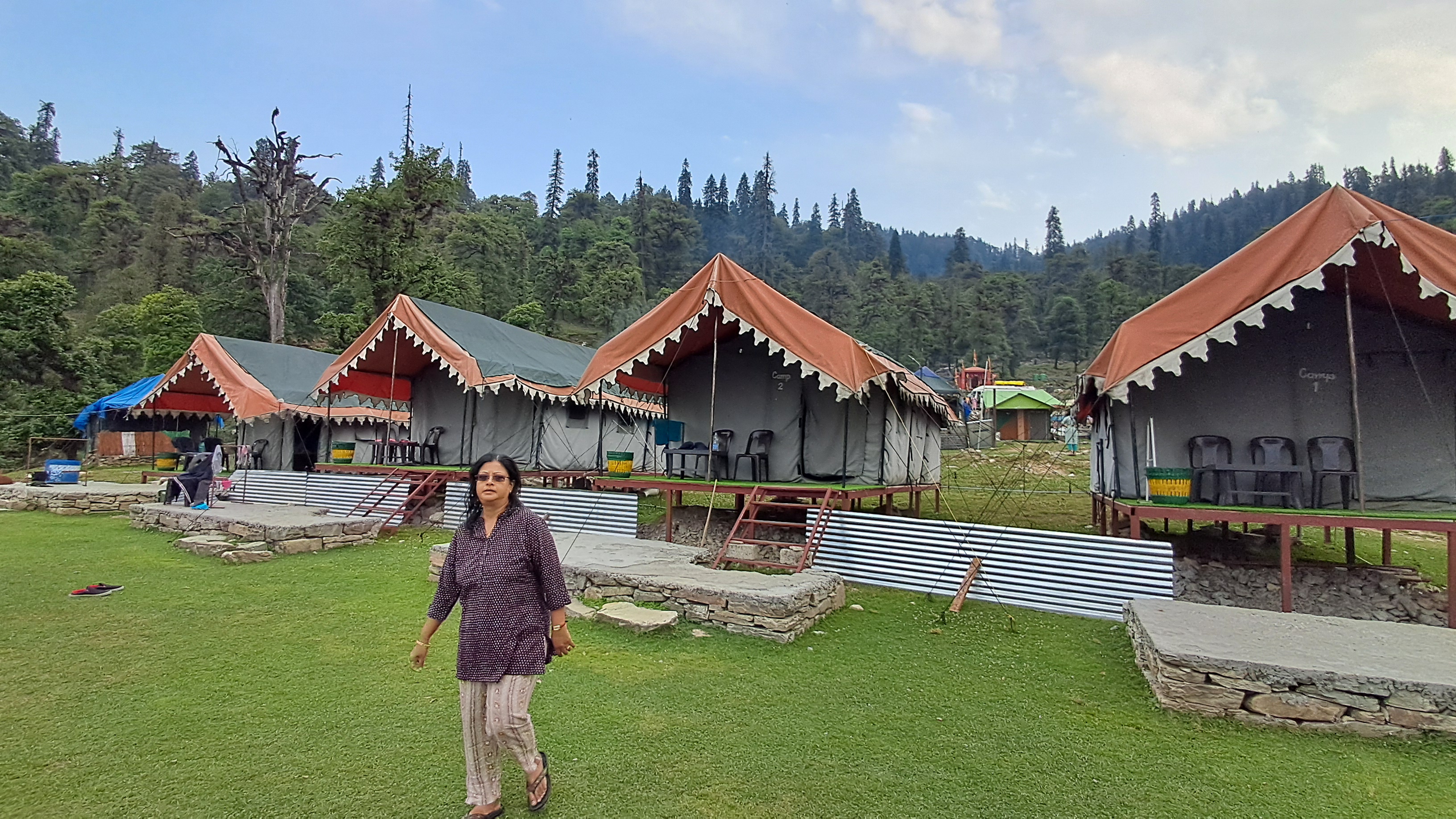
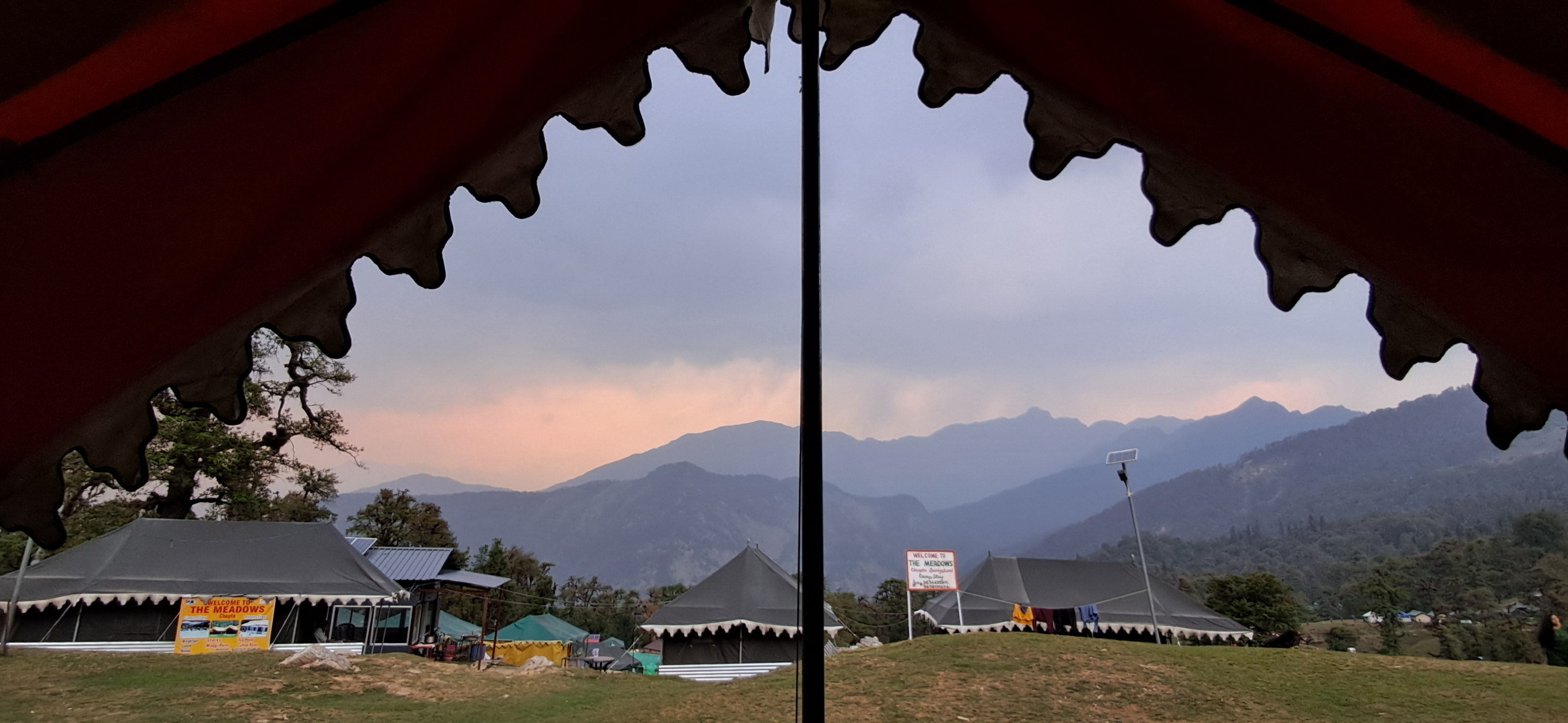
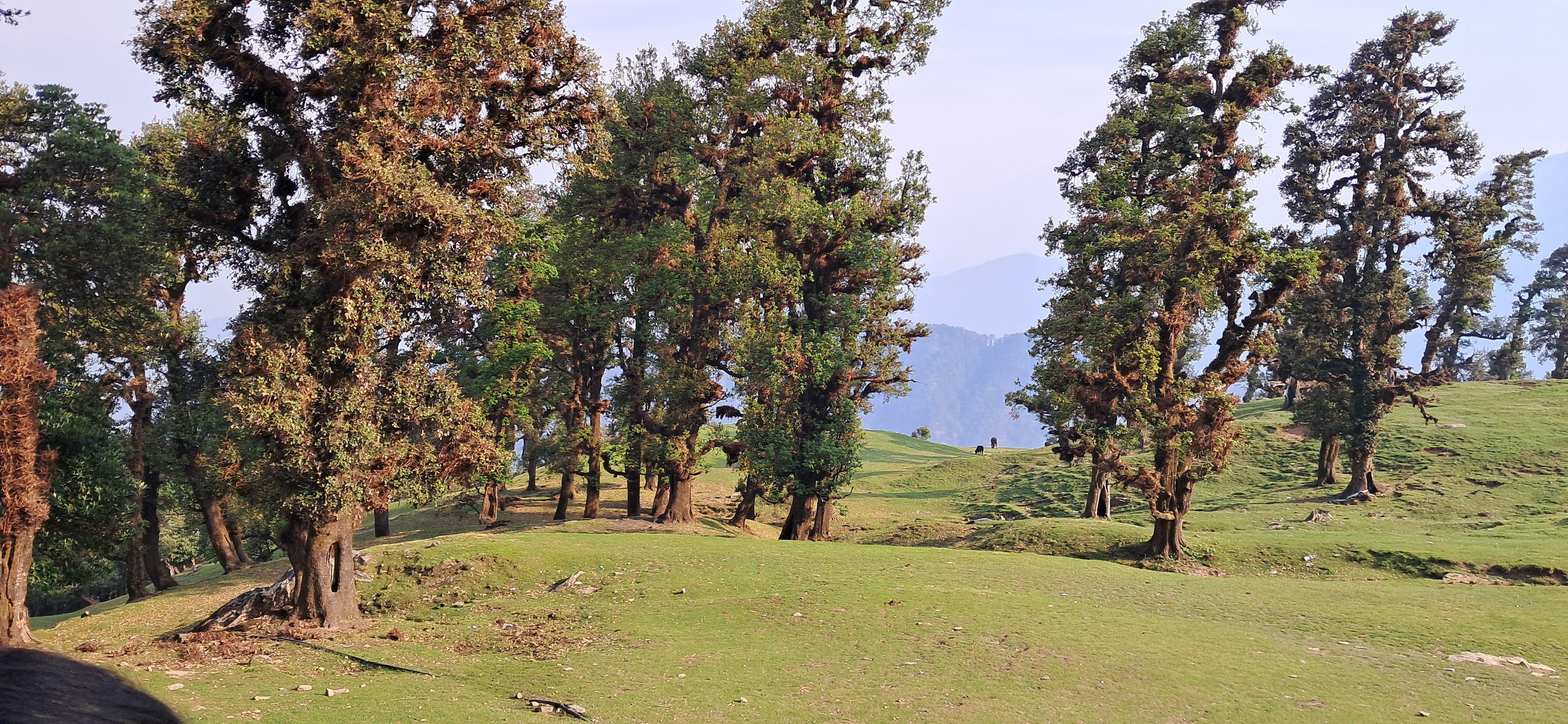
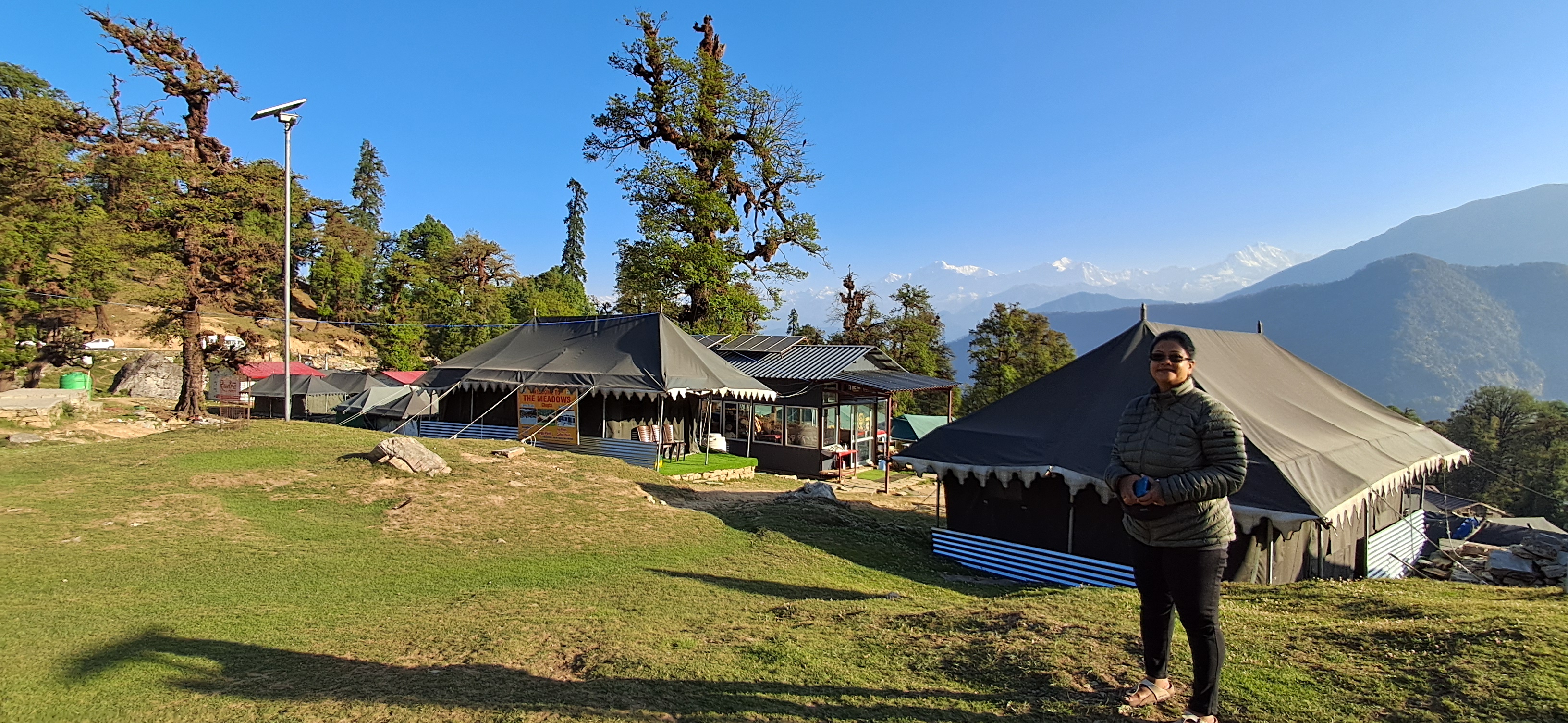
Chopta is the place from where the trek to Tunganath and Chadrashila summit begins. We put up in a campsite full of tents. Forest department wouldn't allow any permanent structure to come up in Chopta. No electricity from external source was allowed, only solar-powered lights were provided. Even the geyser was running on LPG. These measures made the place truly environment friendly and free from ugly concretization.
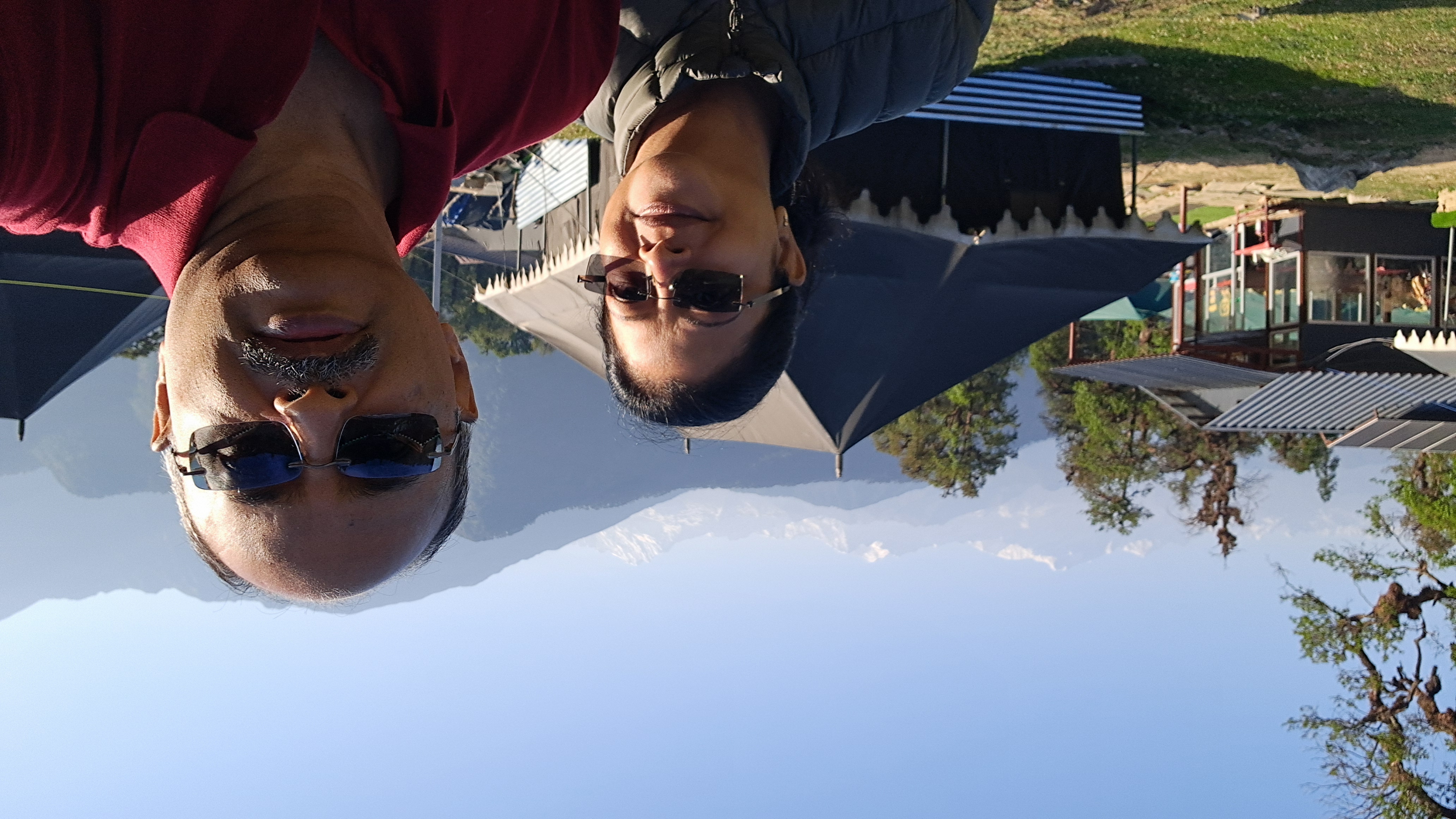
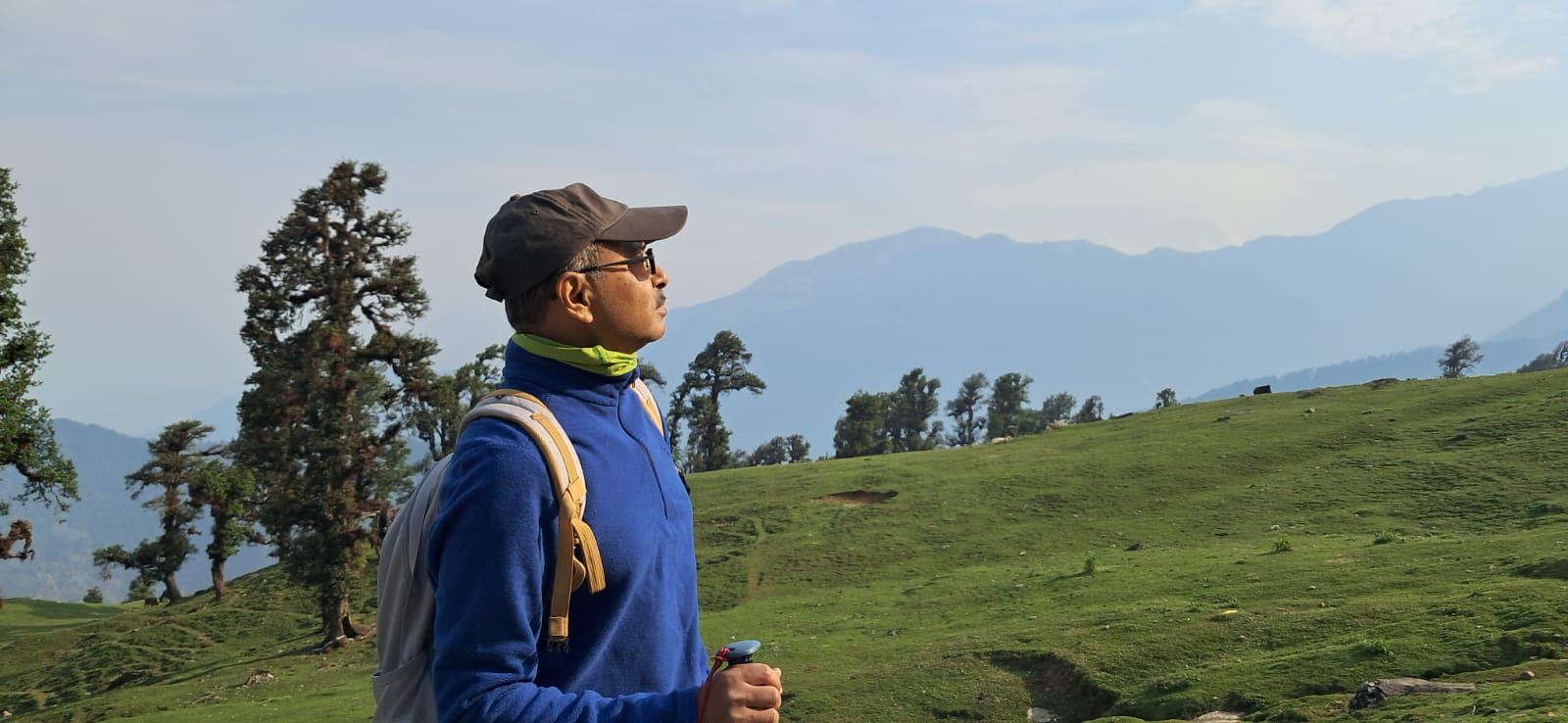
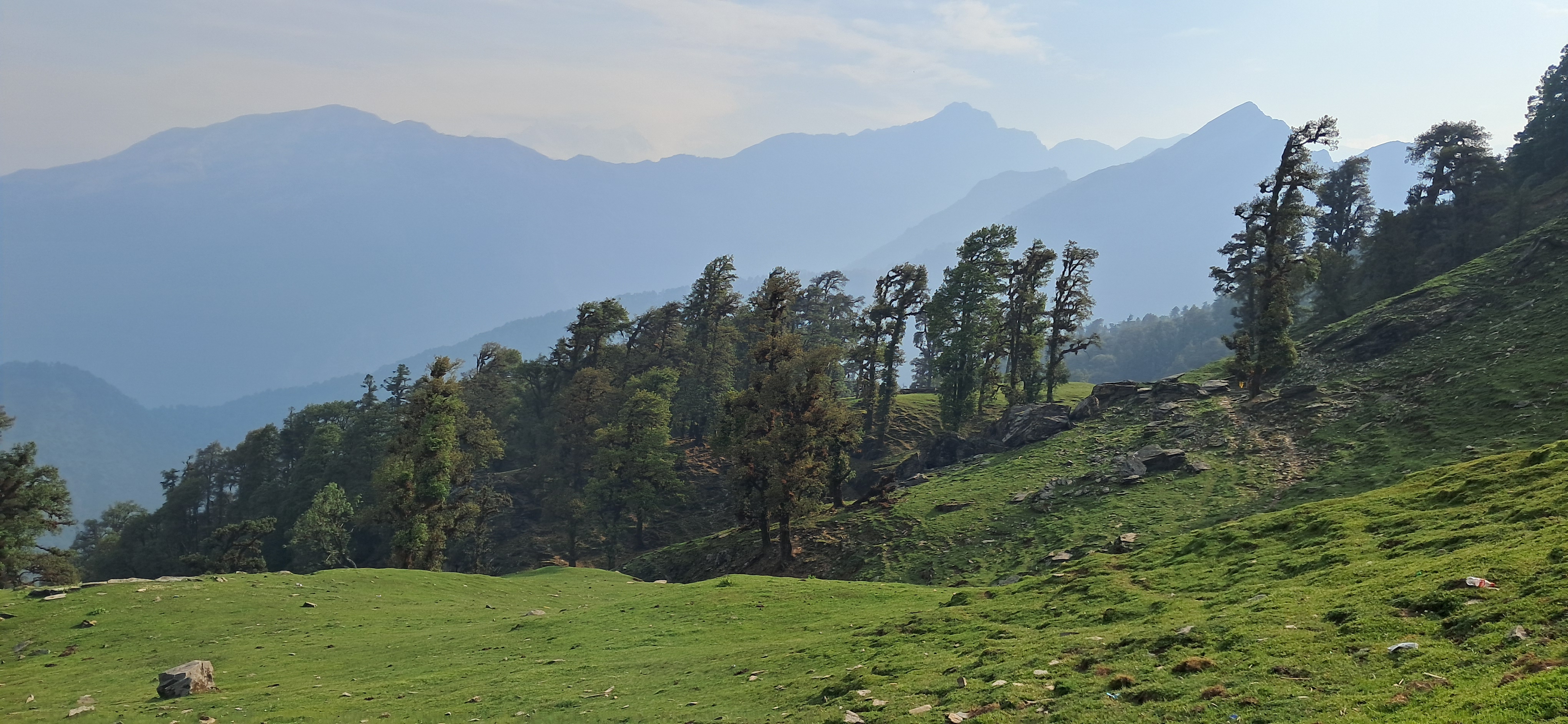
Next morning was time for Tunganath visit. It was fairly cold at 10 degrees, and the sky was overcast with intermittent shower. Nevertheless, we started at 7 am from our resort campsite. Having already experienced the climb last year, I was mentally and physically better prepared this time. My concern was whether Papiya will be able to make it through. While the trek duration is only about 5 hours till Chadrashila, the elevation was steep. Chopta campsite was at about 8800 ft. The distance between starting point from Chopta till Tunganath temple was only 4 KMS, however the elevation gain is up to 12100 ft. From Tunganath to Chandrashila summit was another kilometer trek through difficult terrain. The final elevation gain was about 13123 ft. Any place above 8000ft is considered high altitude in mountain trek terms. With that, comes the challenge of low oxygen level which is 50% or less of the normal at sea level. So Tungnath-Chandrashila trek was always going to be challenging for any beginner level trekker, as was the case with me last year.
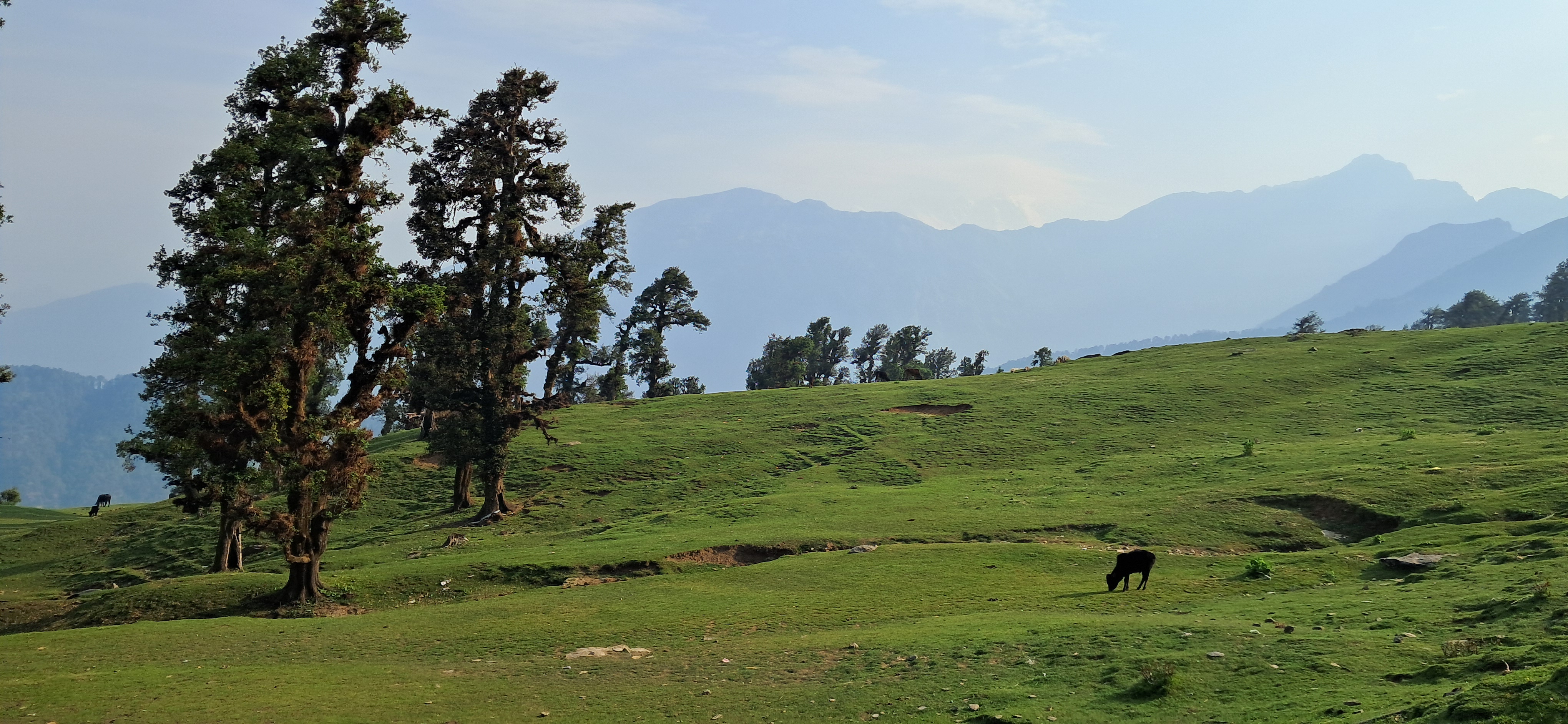
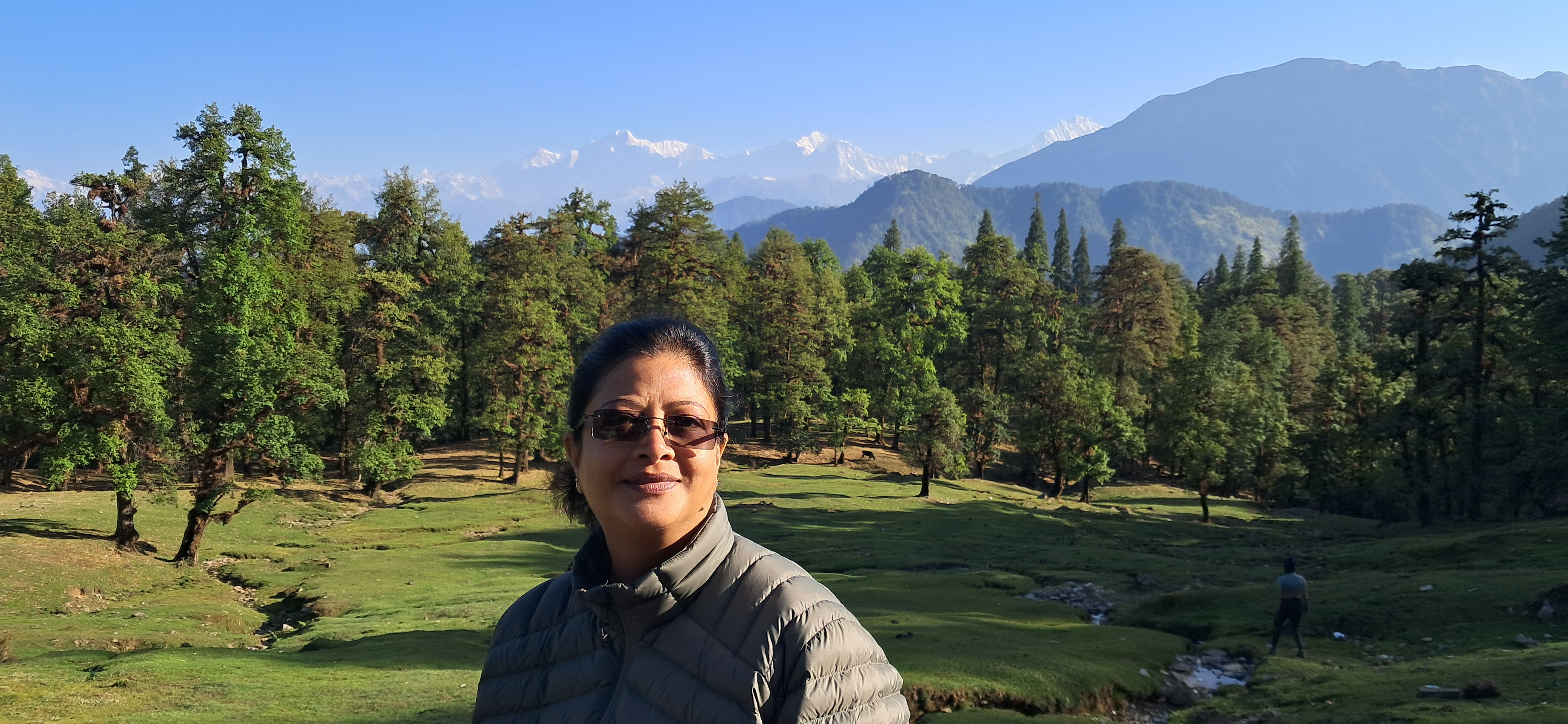
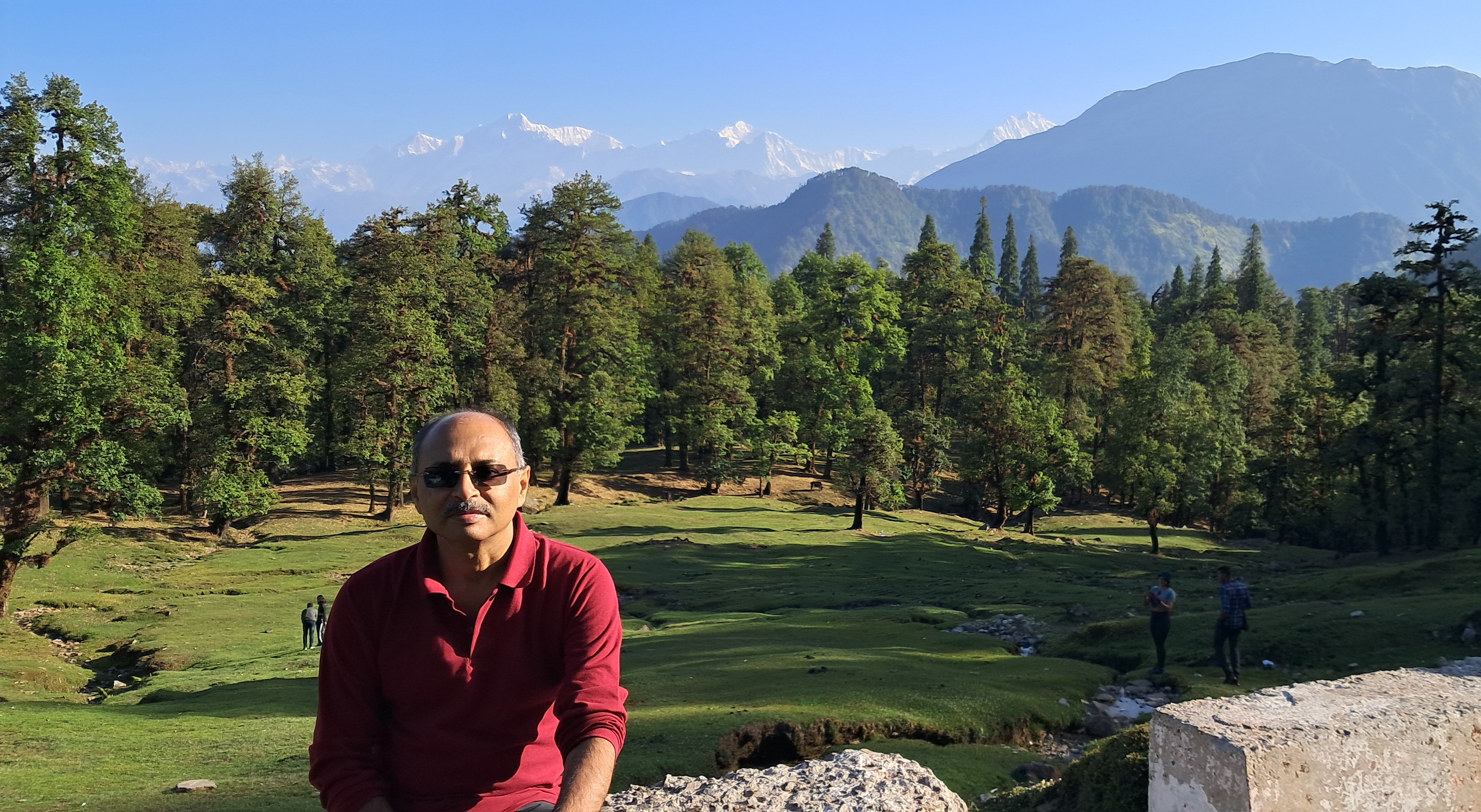
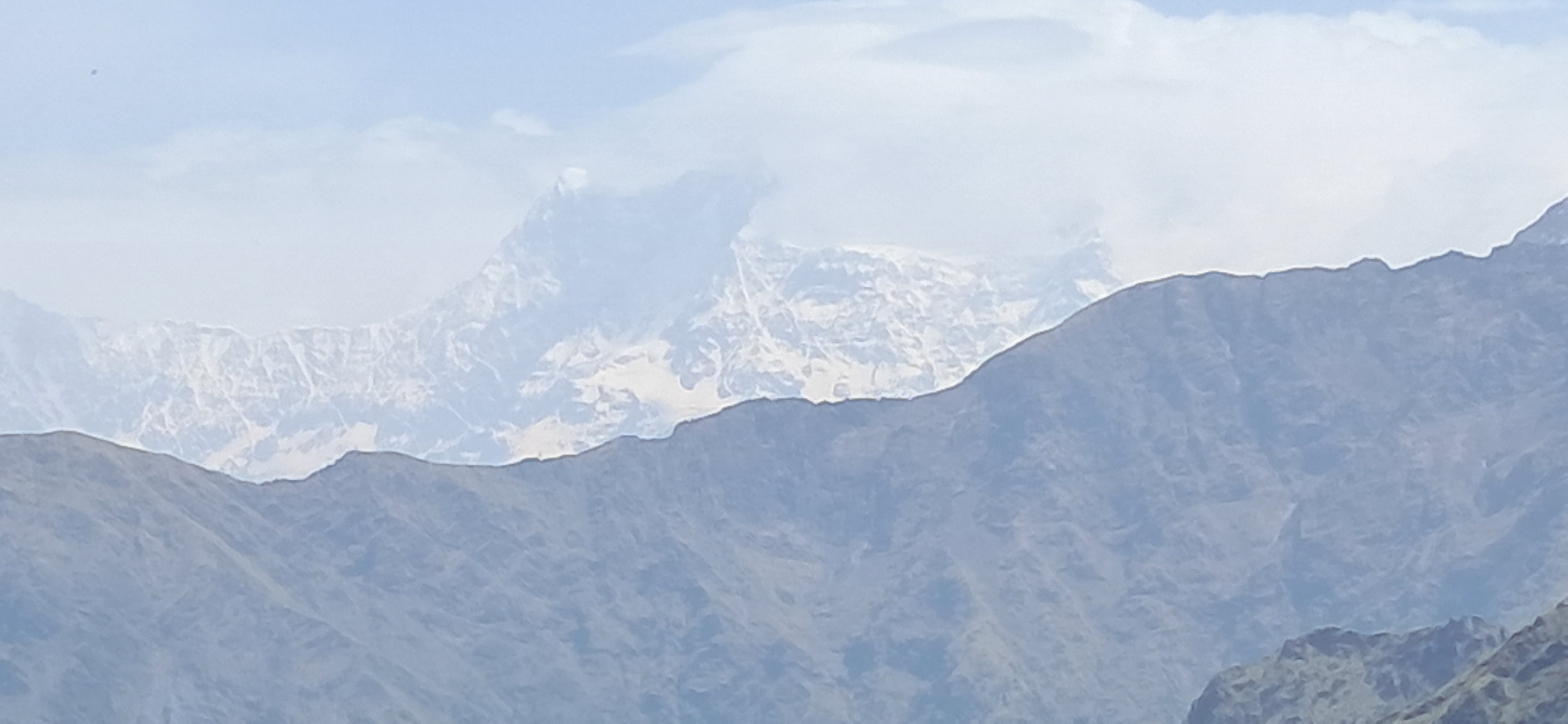
While walking upwards, the beauty of Chopta valley kept unfolding gradually in front of us. The series of snow capped peaks were visible unrestricted right through the walk. Occasional drizzle and cool breeze was relieving the exhaustion of the steep climb. However, the famous Chaukhamba was still elusive, we had to wait till we reached Chandrashila to get a glimpse of that.
One major difference this time was the non-stop marching of ponies, both up and down. Months of May and June being the peak pilgrim seasons, most of the visitors would prefer to ride mules to visit Tuganath temple. Only the serious adventure enthusiasts would opt for trekking the entire stretch. Yet, majority tourists would limit themselves only up to Tunganath; less than 5 percent visitors would then set for Chadrashila summit after reaching Tunganath. Thankfully, Papiya was able to make it to Tunganath confidently. It was tough and strenuous on both lung and the legs, requiring stoppages every few minutes. Besides, one has to be constantly alert and careful to stay away from incoming mules and horses. Carrying an adult on their back and climbing uphill and downhill, these poor animals are in no position to negotiate people on foot. Anyone failing to move away from their path on time would run a serious risk of being trampled.
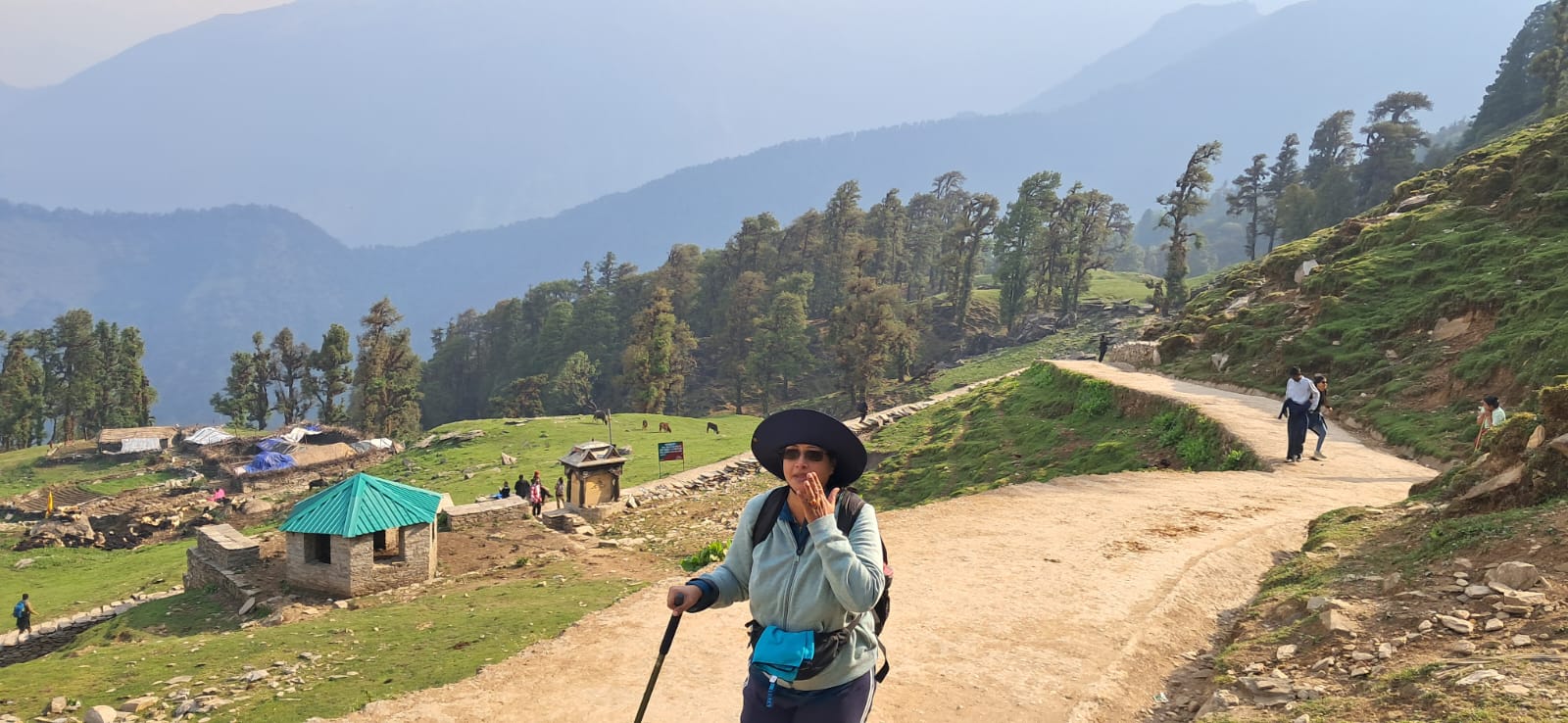
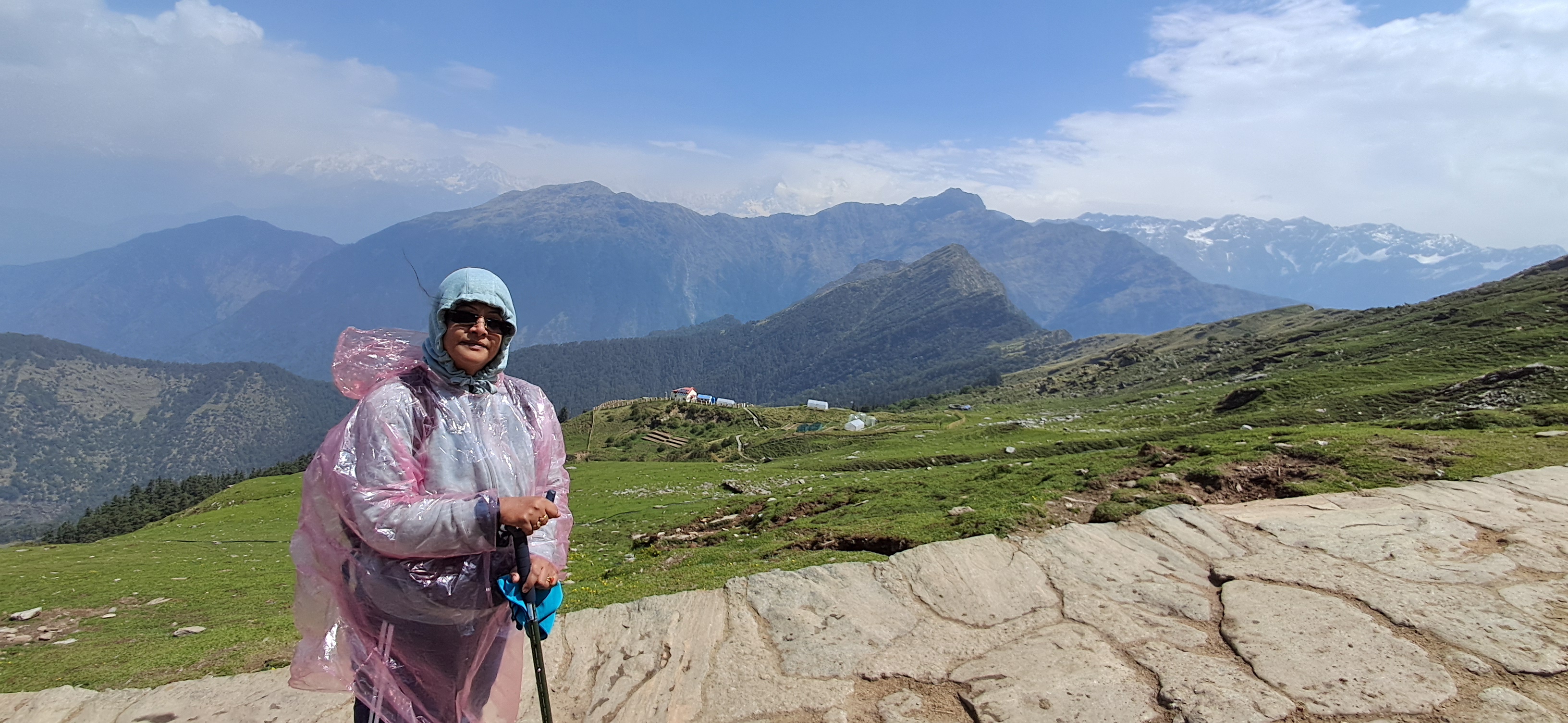
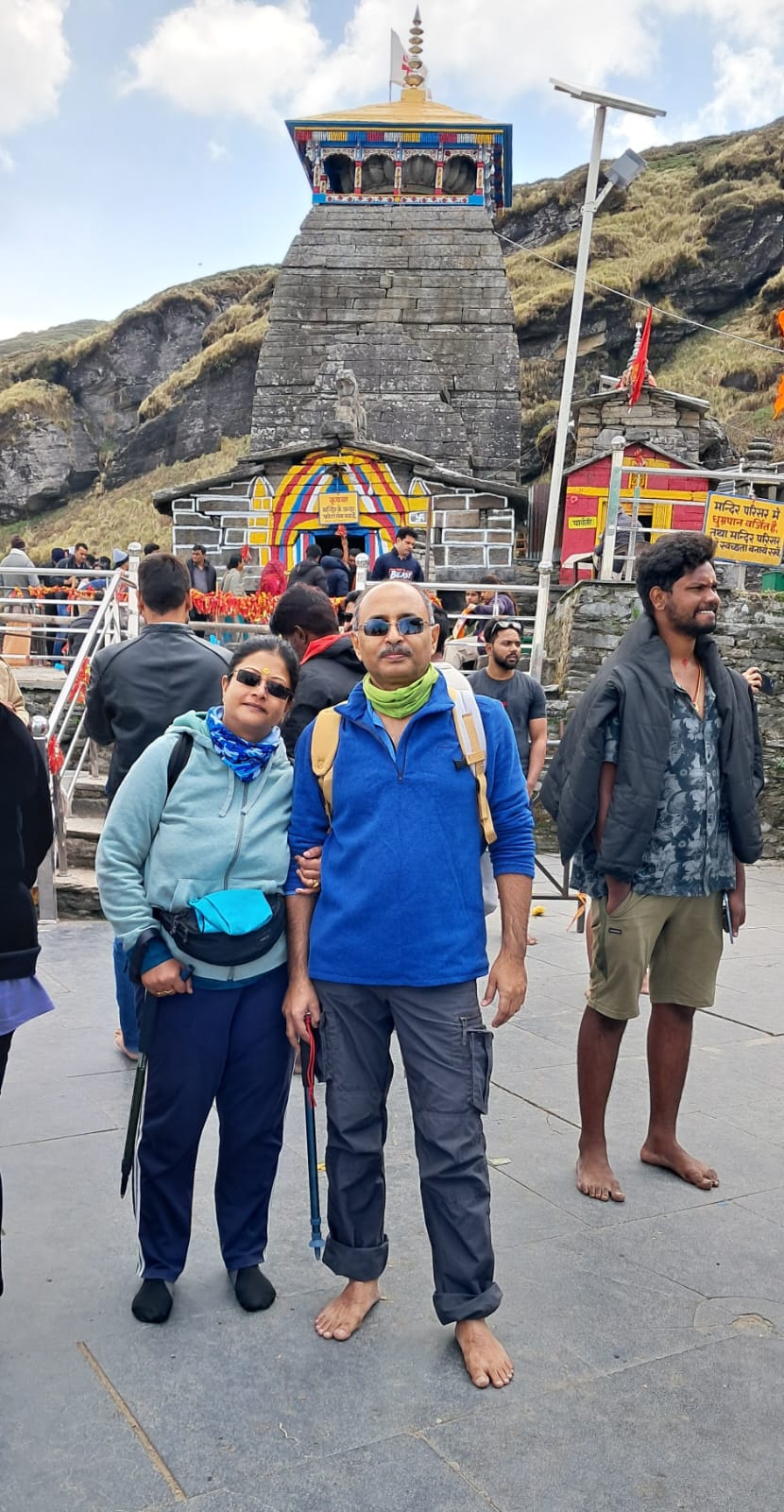
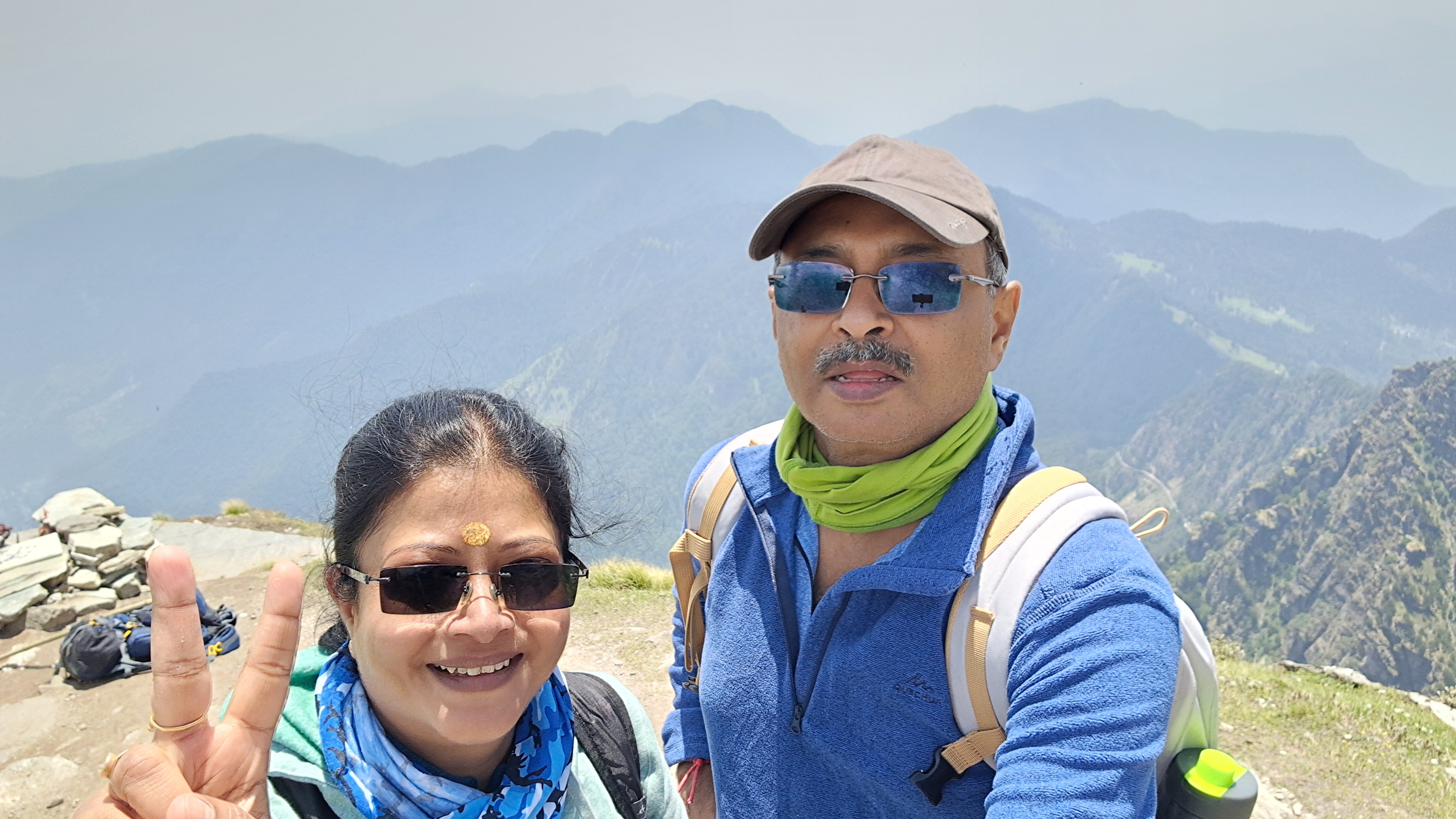
Three hours past, once at the temple, a break of half an hour for the Darshan had given us time to gather our breath back and replenish some energy. Personally, I was happy and relieved that I could have the Darshan this time. Few selfies and photos done, I checked with Papiya if she is willing to give an attempt towards Chandrashila. Her confidence was high after reaching Tunganath. Soon we were on our way towards the summit.
Unlike the path to Tunganath, which was well laid out with stone slabs, the walk to Chandrashila was difficult. Loose stone slabs and slippery steps make the climb a challenge. During winter, it is actually quite risky. Even in October it becomes difficult because of the accumulated frost on slabs. Nonetheless, passing through the zigzag walkways and negotiating rocks, we gradually moved closer to the summit, and the stone temple of goddess Ganga was on our sight. This final one kilometer to the summit would take anything between 45 to 90 minutes, depending on individual capacity. Reaching the peak was an exhilarating experience. One can see a series of major peaks from east to west right from Trishul, Nandadevi on the east, then Chaukhamba at the front, and panning westwards further were Kedar peak and Kedar Dome.
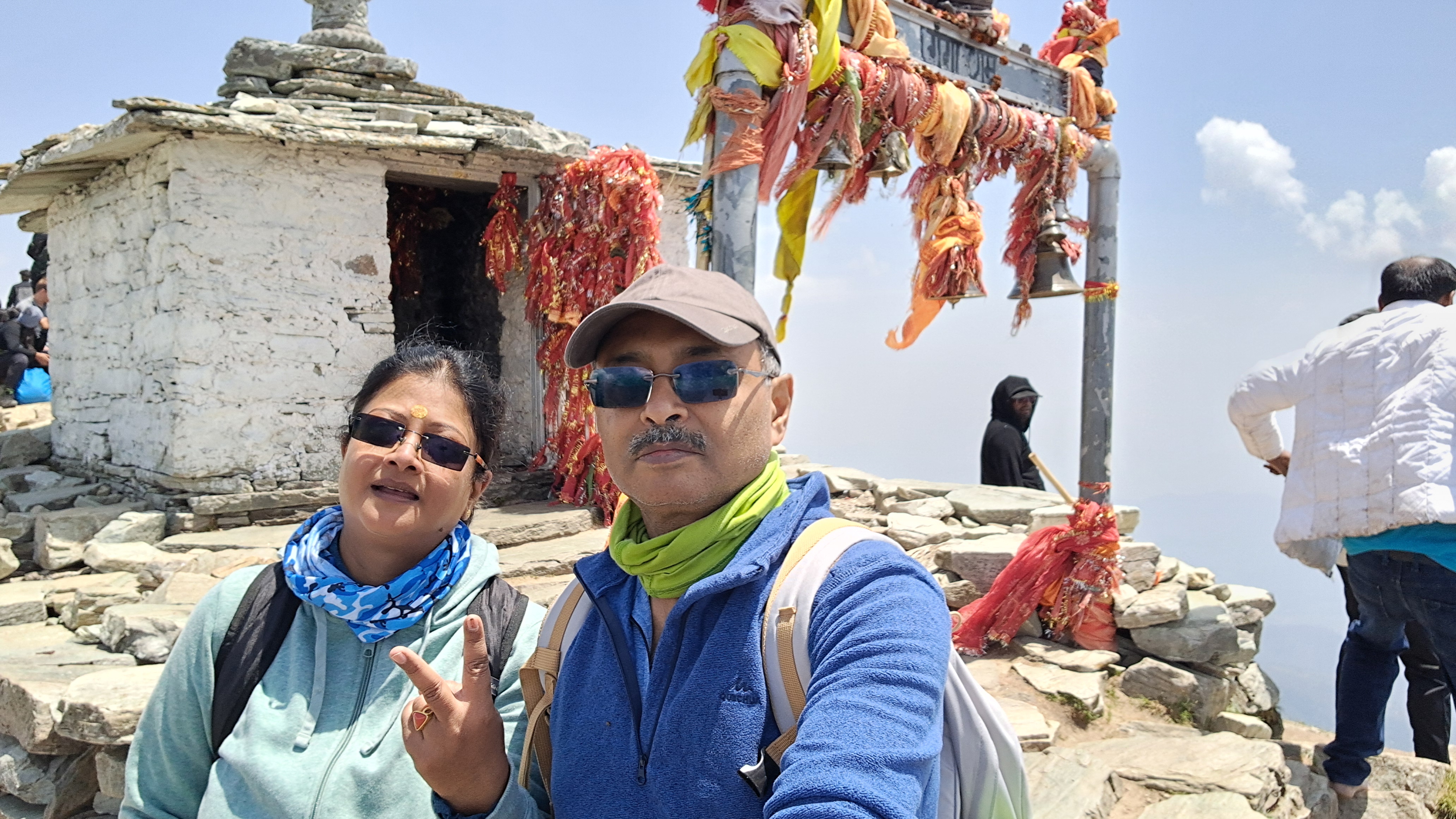
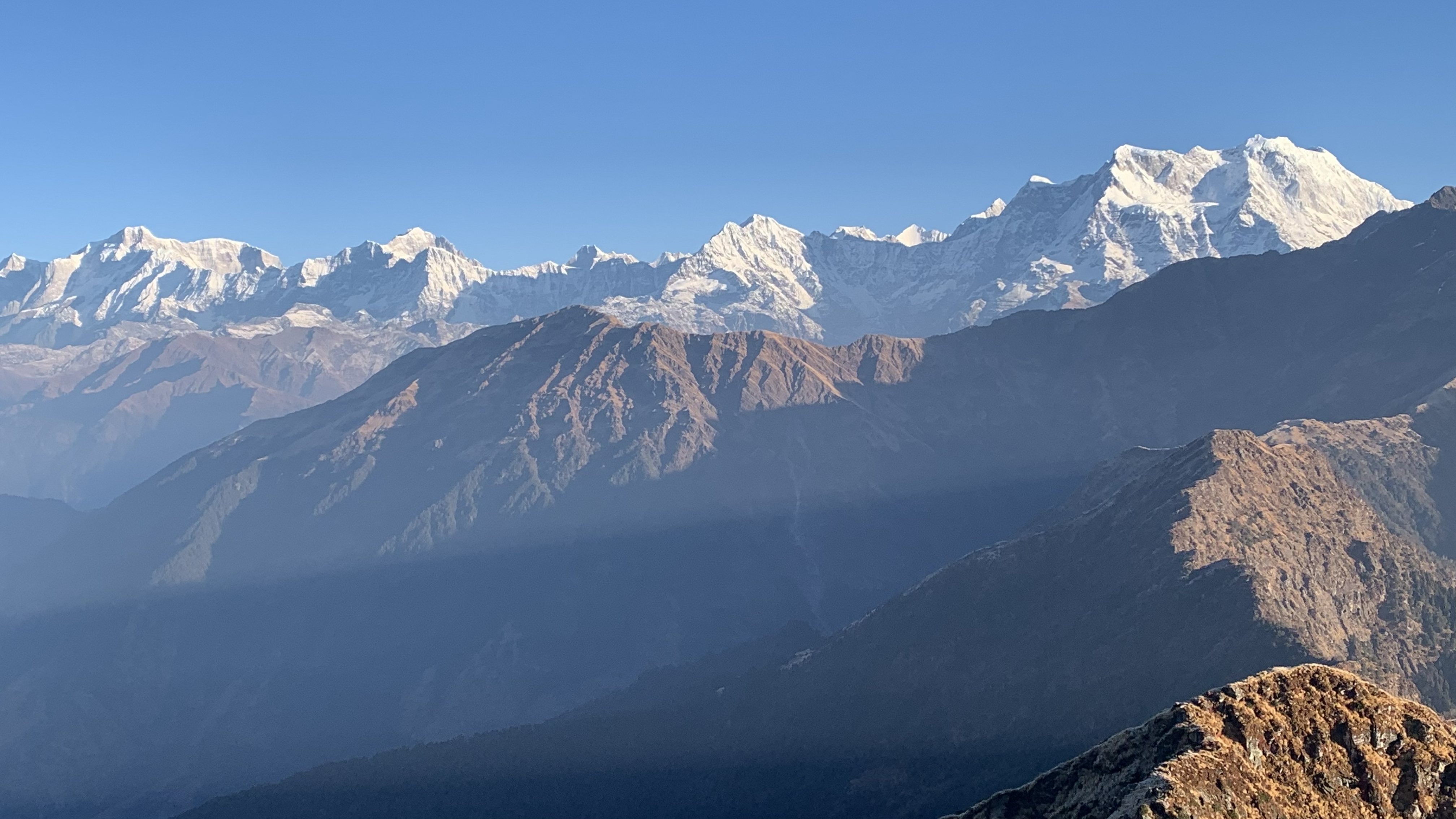
It was the second time for me in seven months that I made to the Chandrashila summit, and for Papiya, it was her first successful Himalayan mountain trek. It was indeed an achievement. On our ways we had seen folks not being able to make it even till Tunganath, leave alone Chandrashila. While returning, many onward visitors kept asking us how far it is, how long it is, and likewise. Not willing to discourage anyone, I could only turn back and point towards the faintly visible edge of the temple dome up in the mountain, asking them to keep walking and not give up. Diehards would nod a smile, and move ahead.
Time for return. Walking down the distance was a different challenge. The lung would breathe easy, however the knees and toes tend to give up, almost! While I was always ahead of her by few meters, Papiya kept asking frustratingly at times, 'how far?'. Pointing at the tar road way down below, where minute looking cars could be seen parked, I kept repeating the words 'just a few minutes more'! Few repeats like that, the words lost their meaning. We kept pulling our exhausted bodies until the end of the walkway.
We returned to our campsite at around 4pm. By then, a storm was building up on the eastern horizon. Suddenly there were strong winds followed by thundershower, all tents were swaying and rocking violently, as if there was an earthquake. Everyone took shelter inside respective tents. I had never experienced a thunderstorm like this while staying in a tent before. Several minutes later, rains stopped and weather cleared. We had no clue that a marvelous sight will present itself next morning.
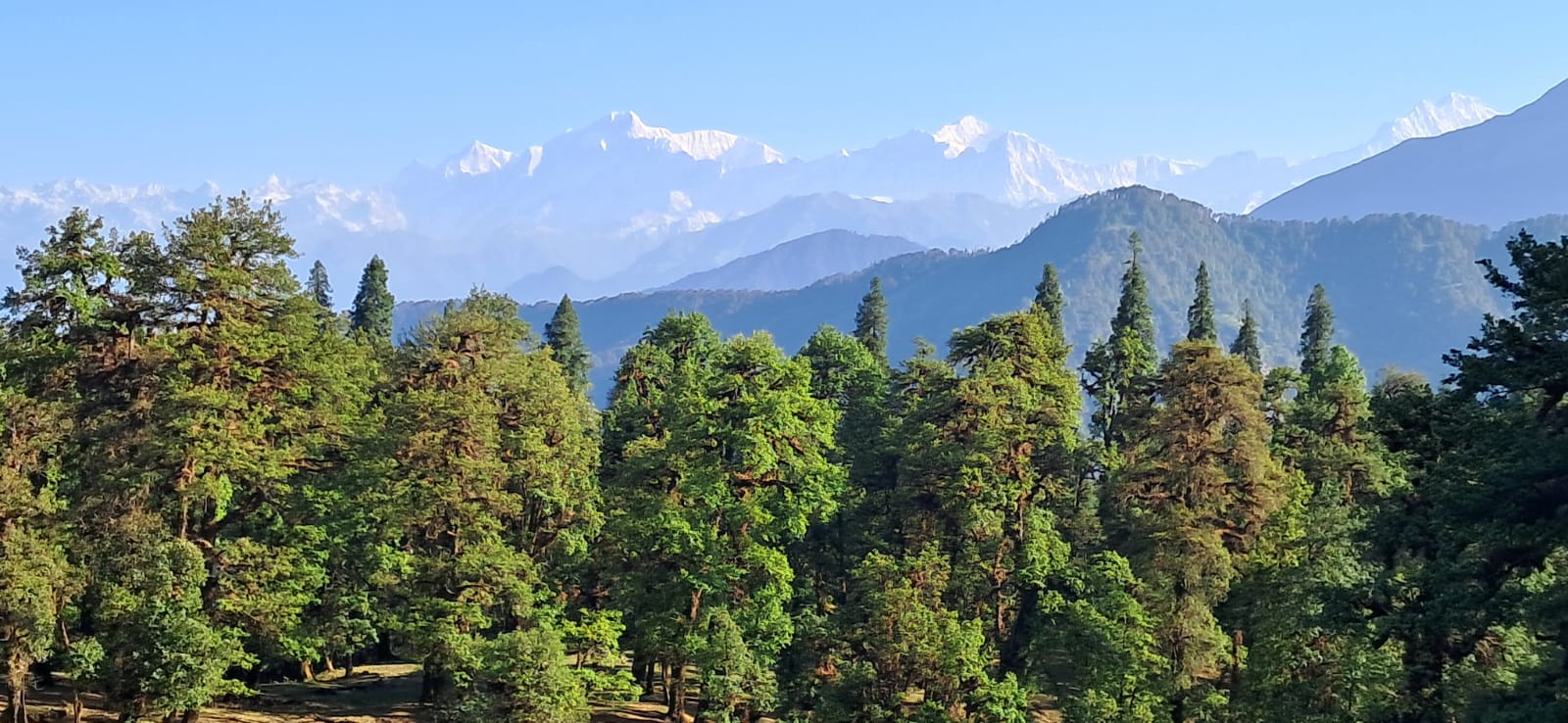
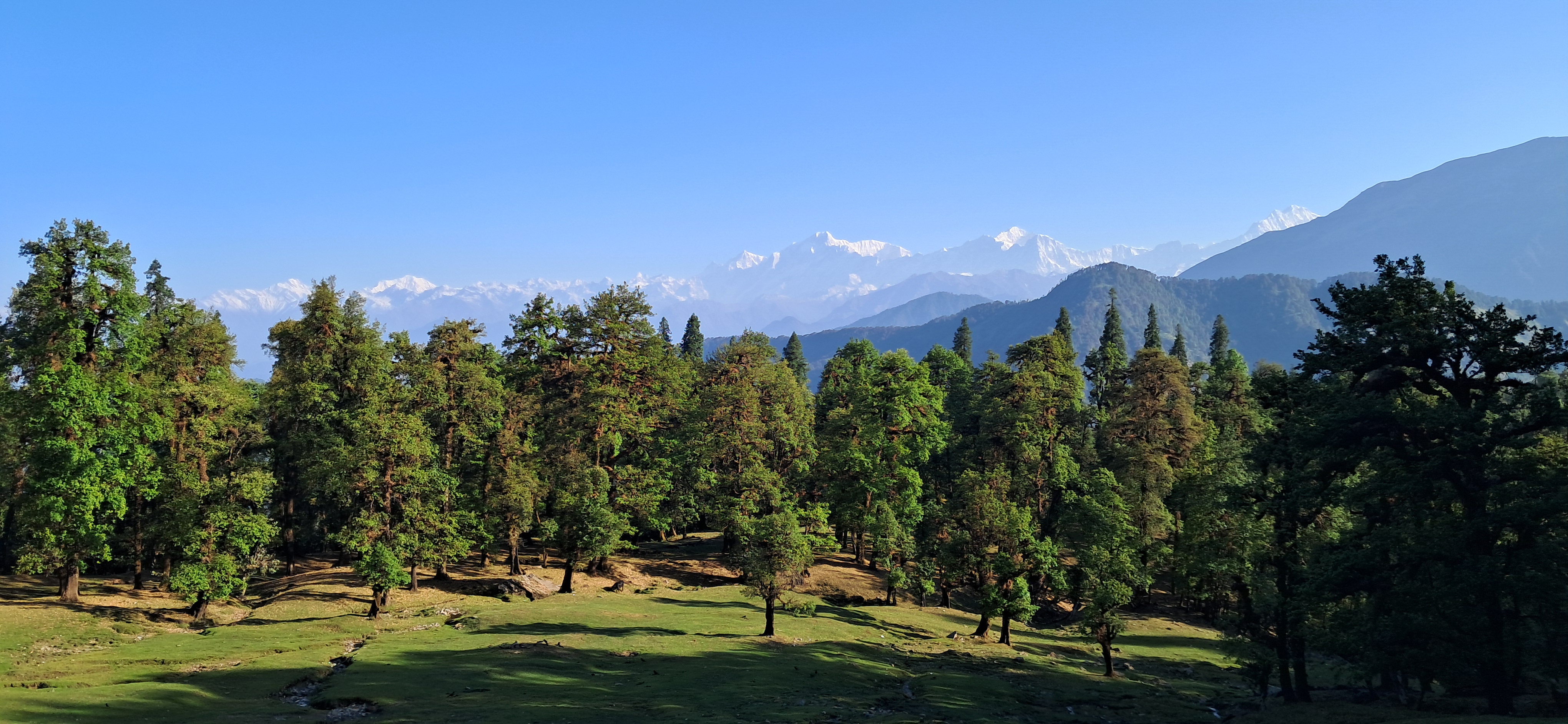
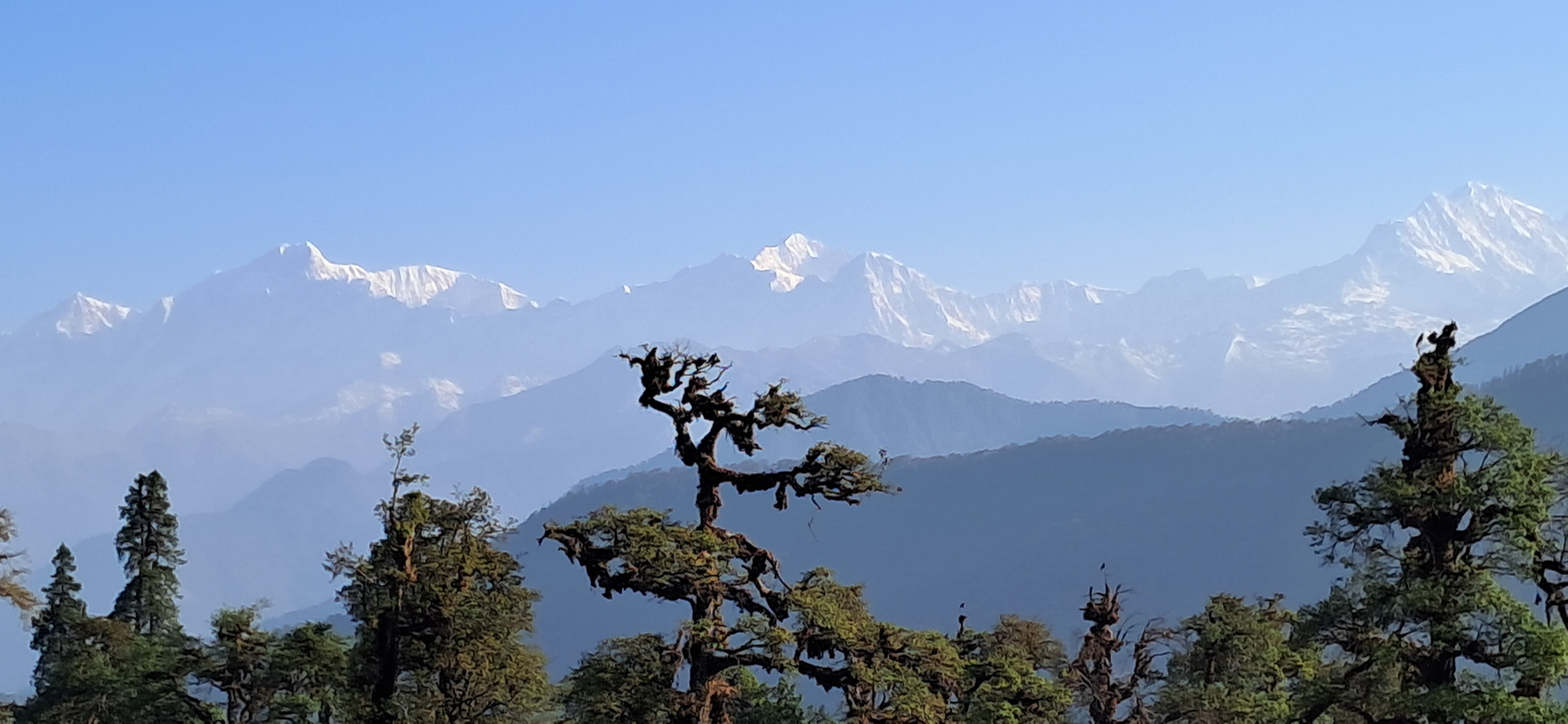
Next day it was time to depart from Chopta, to our final destination to Badrinath Dham. We planned to start early. At around 7:30 in the morning, I stepped out of the tent to let our driver know that we are ready to move. At that point, I looked up and ahead of me. The mountain in front of me was white, covered with fresh snow. The last evening shower in the valley had resulted in a good amount of snowing, up in the mountains. The sky was clear blue, the peaks were blazing white with early morning sun, the undulating valley down below were vibrant green. The entire landscape was a sight to behold. This is what I have been waiting for since last two days, this is what makes people call Chopta the Switzerland of India.
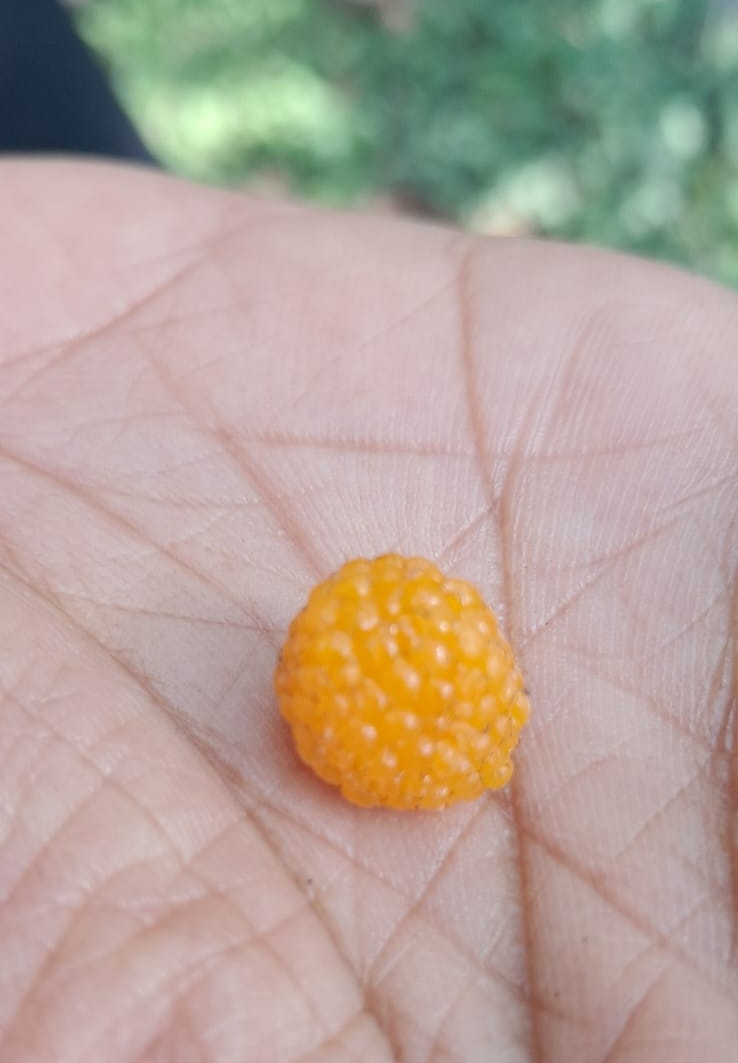
Road to Chamoli was beautiful, through the dense forest, with mountain on one side and green valley on the other, and very little traffic to encounter. Halfway through, we stopped at a beautiful spot. There was a stream gushing down somewhere below. With fresh rejuvenating wind and birds chirping all around, we spent few moments in silence just to absorb the surrounding. Meanwhile, Papiya started glancing through wild plants and trees. On the side of the road there were thick full-grown bushes of wild raspberries. The season of raspberries was over, yet a small button sized yellow raspberry was within our reach. This is commonly called golden evergreen raspberry or yellow Himalayan raspberry. How beautiful that one looked, fresh and glowing. In the end, I was given the honor to consume it. Meanwhile, the driver kept looking at us, amused.
It was time to continue our journey to Chamoli on the way to Badrinath Dham.
Driving through calm, enchanting forests, we eventually reached Karnaprayag, the confluence of the Alakananda and Pindar rivers. From there, the Alakananda became our constant companion, flowing powerfully in the opposite direction towards Rudraprayag. We took a short break at Chamoli. As we climbed higher, the green cover gradually thinned, giving way to a barren landscape strewn with rocks and boulders, reminders of ongoing roadwork on unstable mountain slopes.
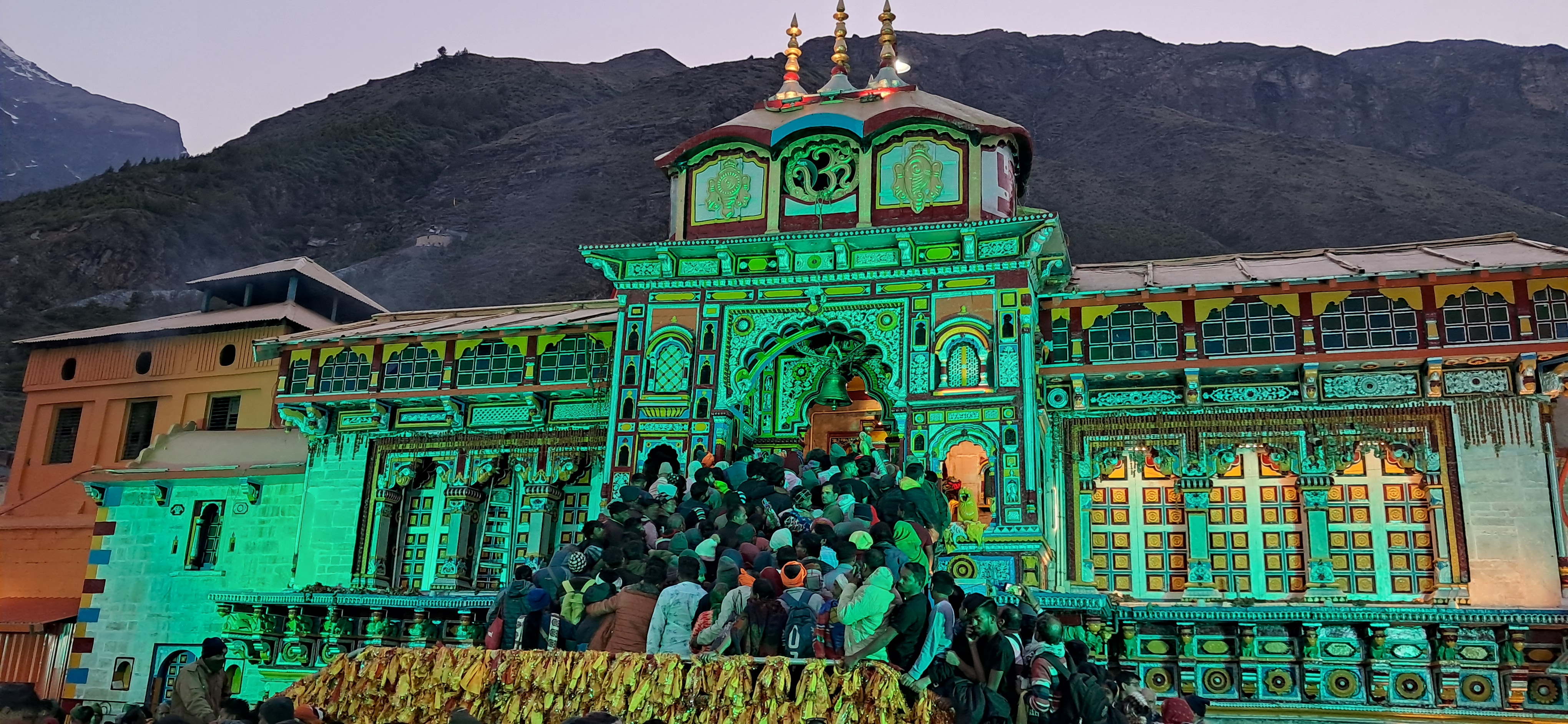
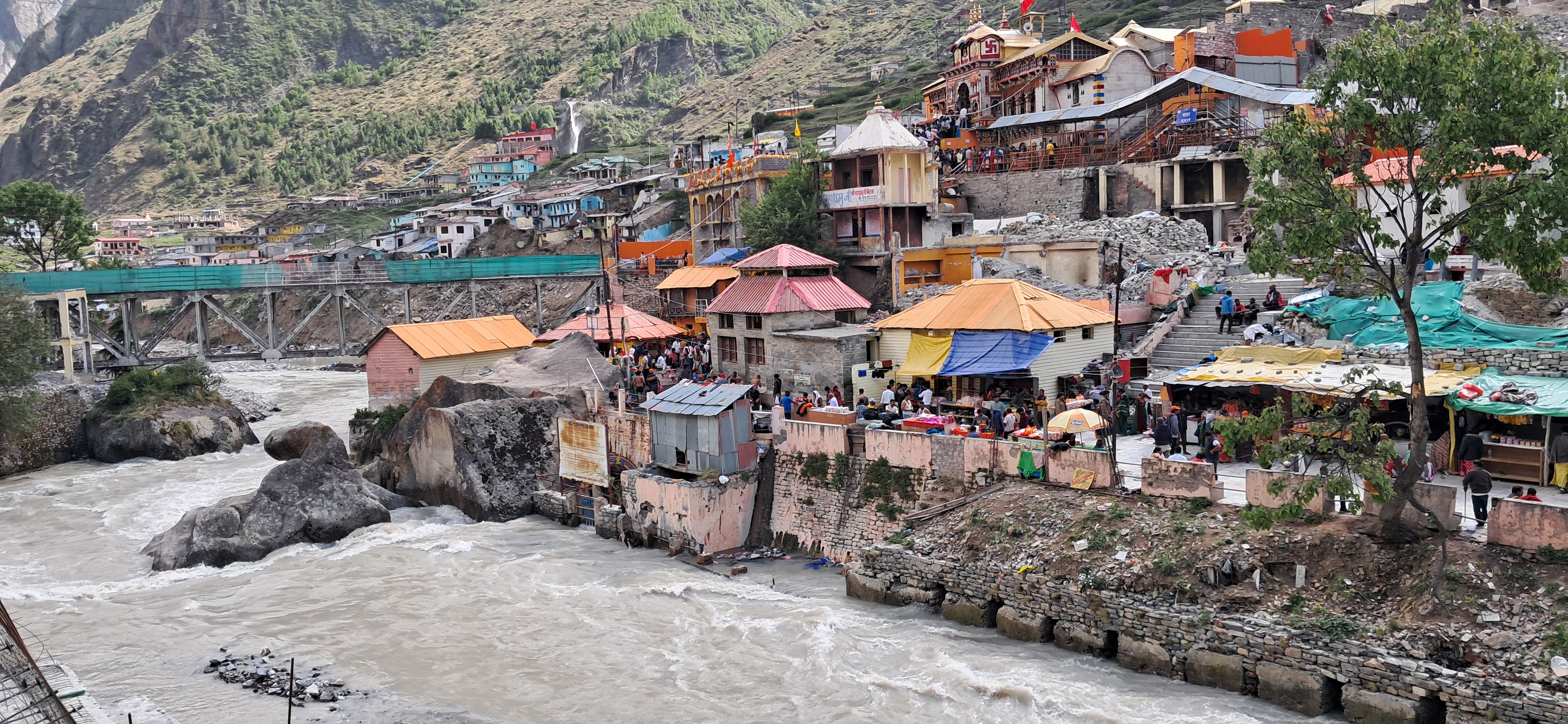
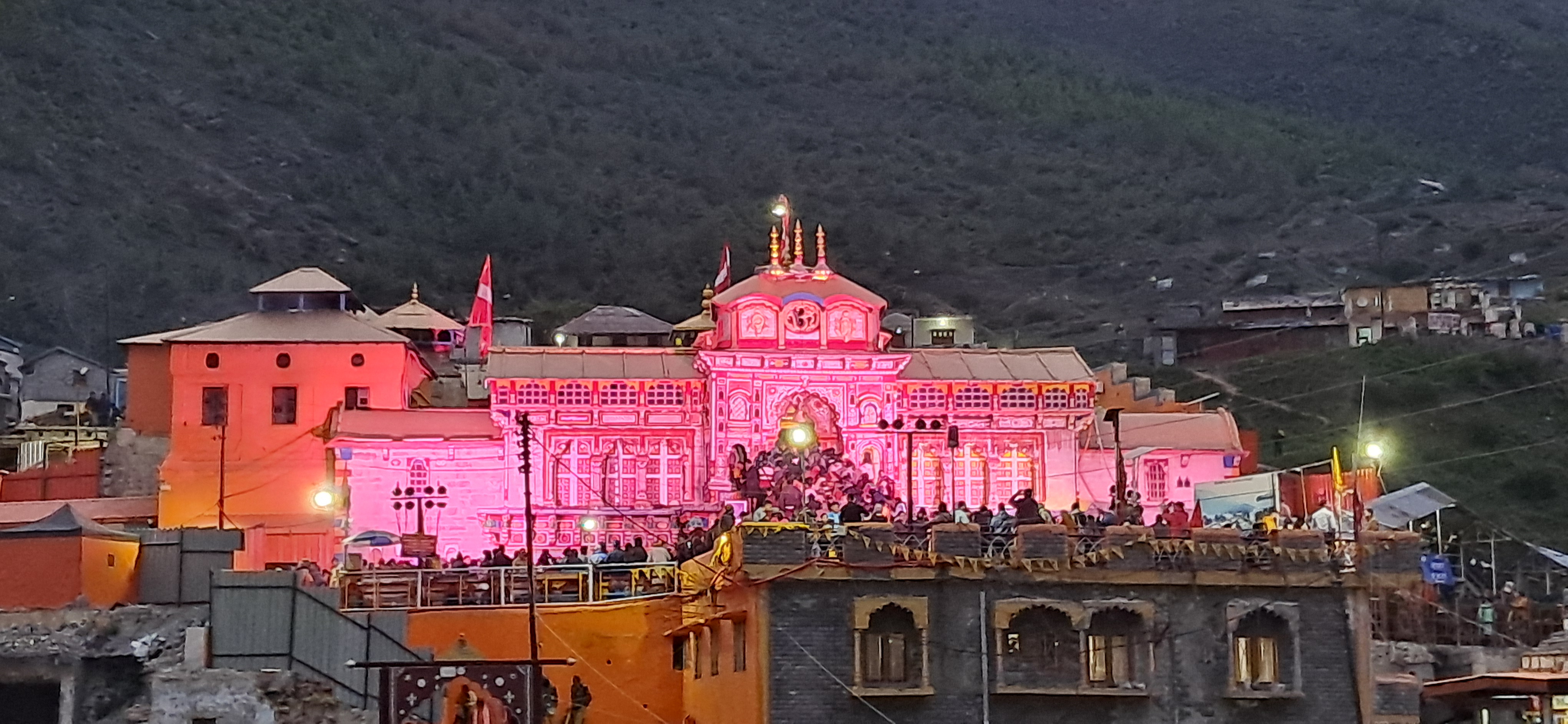
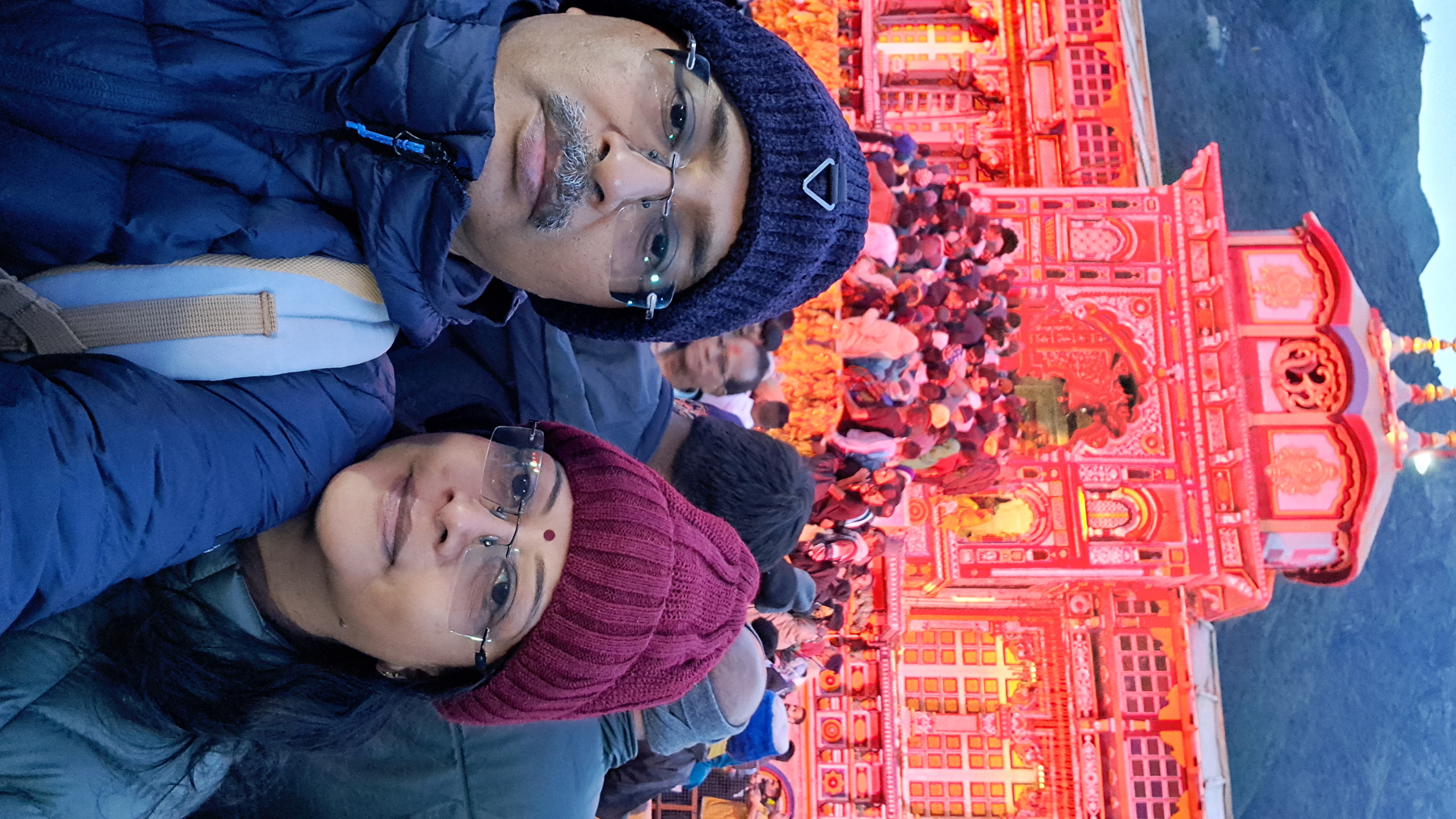
After six hours, we reached Badrinath Dham. With the Char Dham Yatra in full swing, the town was crowded and buzzing with pilgrims. A long, slow-moving queue tested everyone’s patience, while entry into the temple felt chaotic, with converging crowds and relentless pushing. Yet, somehow, we made it through. Moments later came our long-awaited darshan of Badrinath—a cherished dream fulfilled. The next morning, a brief visit to Mana marked the final stop before our journey back to Hrishikesh.
© 2026 Rajib Sengupta. Original story, style and events are the sole intellectual property of the author. All rights reserved.